Funghi Porcini

November 17, 2009 by Patricia Turo

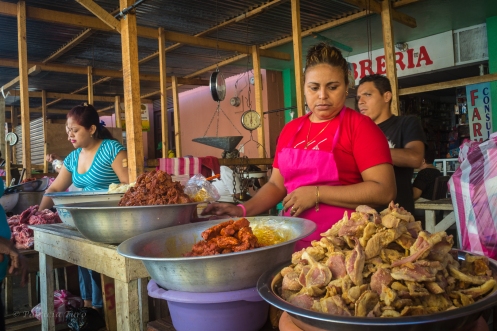
It is quite amazing how people swam around vendor stands in the markets in Italy when funghi porcini are in season. The king of mushrooms are as impressive as they are delicious. They are tossed with pasta, cooked in risotto, are simply delicious grilled with herbs – a meal in itself, served as a salad, sautéd with olive oil and herbs or baked, they can be marinated in olive oil.

When selecting porcini the gills should not be yellowish-brown, which means that the mushrooms are becoming over-ripe. Do not buy them if they have dark under-caps or black spots and also check for holes in the stems where there might be worms. The short round stems should be firm and white. They have a rich woodsy rustic flavor and are simply beautiful to look at.

Brush off any dirt you may find and wipe the mushrooms clean with a damp cloth. Store them in a paper bag, not in a plastic bag or wrapped in plastic wrap. You do not want mosture to form on them. Prepare them as soon as possible when fresh or they will dry out.

Porcini mushrooms are also dried and found year round at the supermarket and must be hyddrated but are also very falvorful. When making risotto or pasta sauce you can also use the hyddrating liquid in the sauce adding a deep concentrated flavor.

Porcini can be found in North America, Europe, and Asia. Fresh Porcini are not as popular in the US as they are in Italy where they are almost over harvested and the collection is regulated.

Risotto funghi porcini
Risotto With Porcini Mushrooms

Recipe Summary
Prep Time: 7 minutes
Cook Time: 20 minutes
Yield: 4 Servings as first dish 2 servings as main course

Ingredients
1 cup Arborio rice
5 cups broth (homemade or store bought, vegetable, chicken)
1 cup grated Parmesan cheese
1/2 lb. fresh Porcini mushrooms, cut into bite size pieces
1 medium chopped onion
3 tablespoons of butter
3 tablespoons extra virgin olive oil
1 clove of chopped garlic
1/2 cup white wine
Freshly ground pepper

Put the butter and oil in a saucepan and sauté the onions until translucent. Add the rice and allow it to cook until it becomes opaque. Pour in the wine so that it just covers the rice. Stir and allow the rice to absorb the wine on a medium heat. Heat the broth and begin to add it in by just keeping the rice covered with liquid. As soon as the rice absorbs the liquid, add a little more. Stir occasionally and continue this process until the rice is almost done. Add the mushrooms and allow them to cook in the rice for another 2-3 minutes. The entire cooking process takes about 20 minutes. Remove the rice from the stove and add the grated cheese, stir and add a little freshly ground pepper.
Note: Risotto cannot be leftover. It must be served immediately as the rice will absorb all the remaining liquid and it will be uneatable.

Note: You can substitute fresh Porcini with about 2 oz. dried Porcini mushrooms, which can be found in the market. You would have to soak them in tepid water for 30 minutes before using them. You can add some of the hydrating liquid to the risotto giving it a more rich concentrated flavor.

Traditional Holiday cookie, Cartellate/Cluster are filled with honey, nuts & spices

November 12, 2009 by Patricia Turo

You ask, what could be more decadent, and I say absolutely nothing. Cartellate are traditionally made during Christmas. They are traditional Pulgiese fried pastries, filled with roasted almonds, honey, spices and chocolate.

Apulia is a peninsula that forms the heel on the “boot” of Italy and has had many conquerors. The Greeks, Romans, Goths, Lombards, Byzantines, Arabs, Normans, Angevins, Argonese, Spanish, the German emperors, Burbons, Turkish and Venetians and more. Referred to as a melting pot – each left their mark on the region. You can see the influences in the clusters of white stucco flat roofed dwellings. But the influences of these cultures are also evident in the food and none more then Cartellate.

I have eaten many Cartellate in Puglia. I can honestly say my aunt’s recipe is the best. She came from Peschici, Foggia and called them “Cluster”. Cartellate is dough mixed with wine, formed into a wagon wheel shape and fried. The pockets in the wheel are the receptacles for honey or mosto cotto (a syrup made from fruits or grape skins), spices, nuts and chocolate.

The Cluster I have had in Puglia are delicious and the syrup is mostly made with honey or mosto cotto, mixed with lemon zest and walnuts. Some have no nuts and might have a sent of cinnamon. My aunt Rafaela filled hers with roasted almonds, chocolate, spices both cinnamon and clove melted in honey. The combination is positively addicting. In earlier times my family only made them at Christmas, but as time passed and the love of Cluster overtook us, we began to make them the star of our Thanksgiving desserts. They were never included in the “Biscotto di Nozze” trays for weddings as they are usually dripping with honey, but today we also make a separate tray of Cluster for weddings.

These cookies are a labor of love and not easy to make, but the good news is that you can place the shells in a brown paper bag and keep some for Christmas. I make the filling and store it in a glass container so that they are ready to fill and take center stage with the rest of our Christmas biscotti. The only problem is that having them around until Christmas challenges your will power.

Cluster Cookies
Cartellate

Recipe Summary
Prep Time: 1 hour
Cook Time: 5 minutes each
Yield: 30 Cookies

Dough
Dry Ingredients
2 1/2 lbs. flour
1 teaspoon sugar
1 teaspoon salt

Wet Ingredients
1 cup shortening
4 eggs
1 jigger of Sherry or Marsala
Tepid water to mix

FRYING
1 quart Canola or peanut oil

FILLING
24 oz. honey
1 lb. roasted almonds, cut in half
1/2 lb. chocolate or chocolate chips, good quality
Cinnamon to taste
Ground cloves to taste

DOUGH PREPARATION
Put all the dry ingredients together in a bowl or on a board, and make a well in the middle. Put in the shortening, eggs, Sherry or Marsala and, if needed a little warm water. Mix until you are able to form a ball. Knead until the dough is smooth and place it in the refrigerator for about 1 hour covered with plastic wrap. You can also mix the dough in a food processor.

ASSEMBLY
If you have a pasta machine, you can roll out the dough to its second to the last level, or you may roll out a piece with a rolling pin as thinly as possible. Using a pastry cutter with a fluted edge, cut strips out about 2” wide and 8” long. Holding the dough at one end, begin to pinch the dough about 3/4 inch apart, creating small pockets along the strip. Bring the dough around from one end crimping the dough together pinching it along the strip to form a circle. These pockets will hold the filling. The cookie looks like a cartwheel, which is the definition of “Cartellate” The cluster cookie should be about 4” round; however they can be made whatever size you want them to be.

Secure the ends with a toothpick so that they will not unravel during frying. You can keep them overnight and fry them the next day. This is important because you don’t want them to puff up too much closing the pockets during frying. Otherwise they will need at least 4 hours drying time.

FRYING
Fry a few at a time in hot oil. Remove when they turn a deep golden color. Allow the shells to drain on paper towels or on a rack. Remove the toothpicks and fill them or place them in a paper bag or box until you are ready to fill them.

FILLING
To make the filling, melt all of the ingredients together in a saucepan, taste for seasoning and place in the refrigerator. The filling will get hard, but will stay in the shells better if somewhat cool.

Start by placing a tablespoon of filling in each cluster cookie. When this step has been completed, go back and keep filling each cookie until you have used all the filling.

The filled cookies will stay a week or more. If you want to make the cookies in advance, place them in a paper bag and they will stay for several days to a month. Never store them in a sealed container or wrap them with plastic wrap.

mos

Lemoncello: Sorrento’s Liquid Gold

November 5, 2009 by Patricia Turo

In Italy there are many alcoholic drinks that are favorites as a digestive. To name a few are Grappa, Moscato, Vino Santo and Prosecco for example. But Limoncello has become one of the world’s favorites in recent years. Although it was well know in Italy, the world has gotten to know the deep yellow after-dinner drink of Lemoncello recently. Prior to that it was produced in small productions and mainly drunk in Italy.

Although many areas of Italy produce Lemoncello today, it originated in Sorrento. The “oval” Sorrentino – the denomination of geographic Indication (IGP) was granted in November of 2000 and can be found on the bottles from the Sorrento region. This IGP of the Sorrento lemons opened up a whole new commercial opportunity for the area. The lemons grown in this area originally were exported, but today about 40% are sold for fresh consumption and 60% are used to make Lemoncello. The Sorrento lemons are medium-large, with a thick, rough, light-yellow skin, an intense aroma and are rich in essential oils. They have a pleasant flavor with a low number of seeds. The key for Lemoncello is the oil in the skin and the color of the skin, as it is just the rind that flavors and gives the rich yellow color to the liquor. The maceration of the peel with alcohol and sugar slowly develops the aroma and color.

The unique fresh taste and the aroma of Limoncello is an excellent digestive served cold. Especially after a meal with strong flavors, Lemoncello refreshes the palate. The bottles are stored in the freezer and I also put the glasses in the freezer for about 10 minutes or so before serving.

Many Italians make Limoncello themselves. Along the Almalfi coast there is hardly a house that doesn’t have lemons growing in their garden.
Lemoncello is used to flavor gelati and cakes, poured over fruit and can be used to with shrimp or other fish dishes.

I make Lemoncello once a year and store it in our wine cellar – keeping one bottle in the freezer ready for a digestive. I have prepared bottles as gifts to give friends who come to visit or for Christmas gifts. Very small bottles can be made as favors for a wedding or parties. One recipe goes a long way. It is a different idea that makes people really happy.

Lemoncello

Recipe Summary
Prep time: 30 minutes
Cook time: N/A
Yield: 1 1/2 quarts
Ingredients
9 large lemons
4/5th bottle Vodka
3 cups water
1 1/2 cups sugar

PREPARATION
Wash the lemons and using a vegetable peeler remove the skins making sure that you do not remove the white part of the lemon.

ASSEMBLY
In a large jar, place the skins and the vodka and seal tightly. Place the bottle in a cool location for 3 weeks or more.

Remove the lemon skins, strain the liquid and add the sugar and water. Allow the mixture to stand outside the refrigerator for about 2 days or until the sugar is dissolved. Pour the Lemoncello into bottles and store in the refrigerator or freezer.

SERVING
When serving the Lemoncello, put the glasses in the freezer for about 10 minutes and pour the Lemoncello into the ice cold glass. It is served as an after dinner drink.

I make Lemoncello to give to my very best friends and family for Christmas gifts. Create your own label – they will appreciate that you took the time to make such a special gift.

For those who would like to read the history and legends of Lemoncello, view the following web site.
tasteofsorrento.sorrentoinfo.com/articoli/sorrento_limoncello.asp

A recipe from Gargano; Calzone con Cipolla

October 31, 2009 by Patricia Turo

Some time ago just after I completed a private Italian language program in Bologna, I took a cooking class from a master chef in Puglia Italy. It was a wonderful personal experience to learn some of the recipes of the region and to use my newfound knowledge of Italian. Chef Marco also knew that I was writing a cookbook about my family recipes who came from the region. He gave me about 30 recipes from chefs throughout Gargano and told me that I could publish them. One of these recipes was his family recipe for Calzone con Cipolla. I have been making it ever since and it is an impressive and delicious luncheon for friends.

Chef Marco had a staff of 4 chefs who taught my husband and I a number of local dishes and to my surprise some were my family recipes that hadn’t changed at all after 3 generations living in the US. My family has been in the food and restaurant business and I expected that some of these recipes would have been Americanized. There were also many that I had never had before and have now brought them back into our family collection of recipes.

Calzone con Cipolla
Onion Calzone

Recipe Summary
Prep Time: 30 minutes
Cook Time: 20 minutes @ 425ºF
Yield: 4 servings

Dough Ingredients
3 eggs
2 tablespoons oil
2 tablespoons water
2 cups flour
1 teaspoon baking powder
1/2 teaspoon salt

Egg wash
1 egg yolk, a little water

DOUGH
Beat eggs, oil and water. Sift the flour, and baking powder and salt in a medium bowl. Make a well in the center and pour in the egg mixture. Stir with a folk until blended (the dough can be made in a food processor). Turn the dough onto a lightly floured pastry board. Mix well and knead until the dough is shinny. Cover the dough for 10 minutes.

Filling ingredients
4 tablespoons extra virgin olive oil
1 lb. onions, sliced
4 anchovies, chopped
8 green olives, sliced
1 teaspoon capers, drained and rinsed
Nutmeg, a few grinds

Salt to taste, because there are anchovies in the recipe, taste the onions and determine if the recipe needs more salt before adding it.

FILLING
Clean and cut the onions in large pieces and cook them well -set aside to cool. Rinse the capers under cold water to remove the brine. Slice the olives.

ASSEMBLY
Roll out the dough, which can be done in 4 calzone, or in 2 large rounds or even several smaller ones. Layer the onions onto the dough. Sprinkle the anchovies, capers, olives and a few grinds of nutmeg on top of the onions. Fold the dough over the top forming an envelope. Crimp the dough on all sides. Brush the top with the egg wash.

BAKE
Cook in a very hot oven for 20 minutes or more. It is best to cook the calzone on a pizza stone; it will come out very crispy. Check the bottom of the calzone; if it is brown and the top is golden it is done. It is possible that it can take longer then 20 minutes.

Ricotta Ravioli from “the old country”

October 27, 2009 by Patricia Turo

For me there just isn’t any other pasta that is as good as old fashion ricotta ravioli. My grandmother was the expert in our family and thank goodness she loved to teach us all how to cook. I often wonder when I read stories by chefs or others who write blogs about food how it is that everyone mentions their grandmother as being their inspiration. Whatever happened to their mothers? My mother was a great cook also and we loved making cookies and ravioli with her. It was a family affair in the kitchen as we only made them for holidays. Today I make them very often and with different filling. I love when my children and grandchildren join in and I can continue the roll of the grandmother who inspires them to cook. I have put all these recipes on a CD for them to carry on the traditions and heritage that I treasure.

Being that we have an Italian heritage, we always have some Italian dishes during our holidays. Whether it is Thanksgiving, Christmas Eve or Easter, there is always ravioli on our table as a first dish. We would set up an assembly line with all of us pitching in to make hundreds of them before Thanksgiving so that we could have them for Christmas also. They freeze very well, but don’t ever defrost them before cooking them, just put them into a large amount of salted boiling water directly from the freezer.

The recipe here is my grandmother’s recipe. She made them very big, not like the little ones you find today in many restaurants. These are “the old country” ravioli and I love them. She had a small white sideboard with a roll top and made all of her cookies and pasta on this little pull out counter.

Use whatever tomato recipe you like the best. Hers was always a meat-based recipe cooked for hours.

Ricotta Ravioli

Recipe Summary
Prep Time: Dough 10 minutes, filling 20 minutes, 40 minutes forming the ravioli’s
Cook Time: 10-15 minutes and test them

Yield: 35 Ravioli

Dough
3 cups flour
1/2 teaspoon salt
4 eggs
Warm water to mix

Filling
2 lb. whole milk ricotta
2 eggs
1 teaspoon or more of salt
1/4 cup chopped parsley
1/2 cup grated Parmesan cheese
Salt & pepper to taste (slightly over salt)

Add finely chopped parsley and grated Parmesan cheese and the eggs to the ricotta, taste before adding salt. Slightly over salt the filling. Set the filling aside.

Place the flour on a board and make a well in the middle. Add the eggs and salt with a little water as needed. Use a fork and beat into the well the flour a little at a time. Form the dough into a ball and knead until it is smooth and shiny. Let it stand for at least 15 minutes to rest. If you are using a pasta machine to roll out the dough, keep the dough dry by adding less water. When using a pasta machine, roll the dough in the different slots until you come to the second to the last slot. This consistency is the desired thickness. As you roll the dough through the different slots, it will also knead the dough. If you are using a rolling pin, roll the dough out so that it is thin enough but not so thin that it would break. Roll the dough out into a large rectangle, (large enough to fold over the filling) in an envelope style.

Place a tablespoon of filling along the middle of the dough. Fold the dough over the filling forming the envelope. Press down on the edges and also along the sections forming the squares. Be sure to cup the filling with your hands so that you remove as much of the air inside the envelope. Cut into squares (whatever size you wish). Prick the edges with a folk to keep them from opening while cooking.

The ravioli can be frozen at this point on a platter, and then removed when completely frozen to freezer bags. They can be cooked fresh in the same way as stated below.

Take them directly out of the freezer and place them in boiling salted water. When the water comes to a boil again, turn the heat down and let them cook at a light boil. They will float to the top when they are done. Test one to be sure they are done before removing them from the water. Remove them very carefully so that they don’t break. It is best to let them stand for a few minutes to let the water drain out completely.

Note: Other fillings such as spinach, squash, meat, or fish such as lobster or crab fillings can be used with the basic dough recipe.
Note: They can be served with a tomato sauce or butter and sage.
Note: If serving for a first dish, serve 3 ravioli. If serving for a main dish about 5 to 8 is a good size serving.

Ravioli Dolci di Puglia

October 22, 2009 by Patricia Turo

One of my friends on Foodbuzz was looking for ideas on how to use Ficoco, which is fig jam with cocoa. Sugar was expensive to produce so many things were made with jams or mosto cotto (grape syrup) to sweeten cakes, cookies etc. Itlians have many jam filled cookies that ficoco would be perfect for, in fact figs were also used to make mosto cotto.
http://turosdolci.wordpress.com/2009/08/24/a-grape-surprise-that-give-tarts-a-new-twist/

I have several stuffed cookie recipes that we make and one imparticular is “Ravioli Dolci”. This cookie is a recipe from Apulia. Ravioli Dolci is a fried cookie that does not have a long shelf life, in fact this is best eaten the day they are made. They would be a perfect for a Thanksgiving dessert.

Ravioli Dolci di Puglia

Recipe Summary
Prep Time: 1 1/4 hours
Cook Time: 1 second per batch, about 3 at a time
Yield: 26 Dozen

Dry Ingredients
8 3/4 cups flour
1 teaspoon sugar

Wet Ingredients
1 cup shortening
4 eggs
1 shot glass of Marsala wine
Warm water, as needed
Canola or peanut oil for frying

Filling
8 oz. size bottle of honey
1 lb. roasted almonds, finely chopped
1/2 lb. chocolate or chocolate chips, chopped
Ground cinnamon, to taste
Ground cloves, to taste

Variation
A teaspoon of any variety of jam that you like can be used in these cookies.

Topping
Confectionary sugar

Filling
In a pan on medium heat, melt all of the ingredients together, taste for seasoning and place it in the refrigerator.

Dough
Put all the dry ingredients together in a bowl or on a board and make a well in the middle. Put in the shortening, wine and if needed a little warm water. Mix until you can form the dough. Knead until the dough is smooth and place in the refrigerator for about 1 hour. You can also mix the dough in a food processor.

Assembly
If you have a pasta machine, you can roll out the dough to the second to the last level. Or you may roll a thin layer of dough with a rolling pin. With a round cookie cutter, cut circles about 1 1/2 inches in diameter. Place a small amount of jam or of the roasted almond honey mixture with the tip of a teaspoon in the center of each circle. Fold over like a half moon and crimp the edges with a fork.

Frying
In a deep pan filled with oil, fry about 3 at a time until they are golden brown. They turn brown very quickly; only about a second per batch.

Topping
Allow them to cool and sprinkle confectionary sugar over the top.

Panettone: A traditional sweet bread is a symbol of Christmas greetings

October 19, 2009 by Patricia Turo

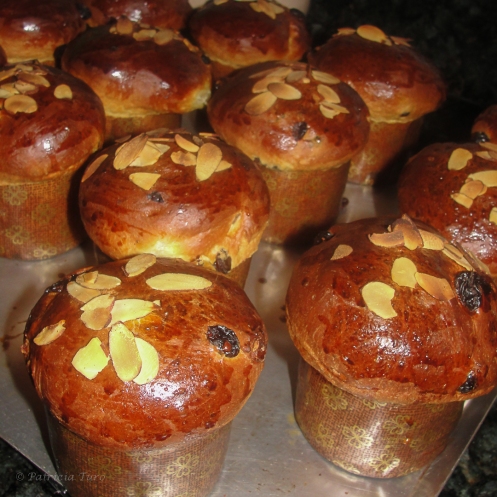
A traditional sweet bread made at Christmas time, panettone was created in the Lombardy region of Italy and is the undisputable holiday favorite. Scholars have traced panettone back to the middle ages. The dome shaped sweet bread is traditionally made with candied fruits, zest and flavored with liquors. Today you can find it with chocolate chips and other ingredients. It is less like a cake then light fluffy sweet bread. The use of natural yeast results in a dough that rises slowly. The rising time can be as long as 48 hours. The long leavening contributes to the long shelf life, which can be as long as 6 months. Italian bakers take pride in the age of their leavening and some are maintained over many years.

It is eaten in Italy with a glass of white wine and in earlier time generally served as a dessert. Panettone is recognized in Italy as a very special greeting gesture of the Christmas season. Restaurants and shops offer panettone it to their customers as a Christmas greeting and they can be found in all bakeries and markets in all sizes. At Christmas time you can be overwhelmed with gifts of panettone and I often use them to make panettone bread pudding or French toast for my overnight guests and I also freeze it. Panettone has become so popular that you can find it year round not just in Italy but all over the world.

They are baked in greased paper molds, which is removed like a cupcake. The greased paper molds help to maintain their freshness. The molds are available on Internet sites as well as metal panettone pans. The disposable molds are traditional and I prefer them to the pans. Usually packaged in brightly decorated boxes or colored decorated foils in blue and red – they are stacked high in markets.

We make panettone in smaller paper molds similar to cupcake cups but larger, and individually wrap them in cello wrap. We sell them as wedding favors, for parties and business conference breaks. Make them yourself and give them as Christmas gifts to special friends and family.

PANETTONE

Recipe Summary
Prep Time: 35 minutes
Cook Time: Yield: 375ºF for 35-45 minutes
Yield: 12 Panettone cups

YEAST PREPARATION
2 1/4 oz. package active dry yeast
1/2 cup warm water
1 pinch of sugar

Dry Ingredients
4 1/2 cups All-Purpose Flour
2 cups raisins, soaked in dry Marsala, rum or brandy for 30 minutes
3/4 cup sugar
1 pinch salt

Wet Ingredients
6 oz. unsalted butter, softened and cut into pieces
6 large eggs, at room temperature
1/2 cup candied fruit, mix with a tablespoon of flour
1 orange zest
1 lemon zest
1 teaspoon flour, to mix with the zest

EGG WASH
1 egg yolk, beaten
2 tablespoons water

TOPPING
Almonds sliced

Combine the yeast, pinch of sugar and water and mix well to dissolve the yeast. Let it stand for about 10 minutes in a warm place such as the oven to activate. When foam appears on the top of the water, the yeast has been activated.

Put the flour, sugar, salt, butter and eggs in the large bowl of an electric mixer or food processor. Mix the dough with the dough hook at low speed. Add the yeast mixture slowly. When all the ingredients are incorporated, increase to medium speed or until the dough forms a ball.

Spread a little flour in a large bowl and place the dough in it. Cover it with plastic wrap and place in a draft-free place to rise for 2 hours. It should double in volume. Remove the dough and knead it for 5 minutes and return it to the bowl. Cover and let it rise again until it has doubled in volume, about 2 hours.

Strain the raisins and press down on them to remove the liquid. Lightly flour the work surface. Punch down the dough and make a large circle with your hands. Sprinkle the raisins, candied fruit, orange peel and lemon peel over the dough. Fold the dough over the mixture and knead it lightly until all of the ingredients have been incorporated. If you are adding the citron and/or zest, mix with the flour and add it to the dough.

ASSEMBLY
Divide the dough into 12 round equally sized balls, approximately 4 1/2 ounces each. Butter each of the panettone cups lightly and place a ball in each cup. Cut a cross into the top with a knife. If using scissors make a small cut in both directions on the top or each ball of dough. Brush the dough with the egg wash and sprinkle some almond slices over the top. Cover the dough loosely with plastic wrap and let it rise in a warm place for another 1 to 1-1/2 hours or until it has doubled in volume again.

Preheat the oven to 375º F. Bake the panettoni for 30 minutes, or until they are golden brown. Allow them to cool on a wire rack. In this case we don’t have cups and we are cooking several cups. So it should be plural.

Note: The Panettone can be made in one or two molds to make a larger cake.

Panettone molds
http://www.fantes.com/panettone-pandoro.html

History of Panettone
http://int.primopiatto.barilla.com/

The Swiss Alps, Graubünden-Words are not enough! | The News is NowPublic.com

October 18, 2009 by Patricia Turo

As I look out my window in the middle of October the view is of white snow cover mountains and the ski slopes have turned from green to glimmering white. The ski resorts are busy getting ready for their winter guests and anticipating an active winter ski season. Graubunden has numerous ski resorts and attracts winter sports enthusiasts from all over the world. The atmosphere has a buzz and energy as soon as the first snowfall blankets the area. The villages wake up and go into action. This is their time of the year!

Graubünden has its own unique character. It is the largest Canton in Switzerland with Chur as its capital. Austria and Liechtenstein are on its North and Italy to the south. Like all regions in Switzerland, the architecture, language and cuisine are influenced by the French, Italian and German cultures. Swiss German, Romanish (its roots are from Latin) and Italian are spoken and alpine life embraces a wide variety of sports. 

The Swiss Alps, Graubünden-Words are not enough! | The News is NowPublic.com.

From Cape Cod bog’s – Cranberry Walnut Bread

October 14, 2009 by Patricia Turo

Cranberries are native to North America and it is known that Indians served cranberries at the first Thanksgiving dinner and used them with venison. They are an amazing fruit growing under sand and wetlands. European settlers actually give them their name even though the Indians were eating them long before they came to North America. Massachusetts and Wisconsin are the largest producers of Cranberries in the world.

I spent my summers on Cape Cod where there were cranberry bogs in our back yard. After the harvest was over there were many berries lying on top of the bog that got left behind. We would collect them and make muffins and mix them with apple pie – they add a little tartness to the pie that I really like. They are only available in Switzerland in November for a few weeks and to my surprise I am able to buy Ocean Spray cranberries. I buy several bags and freeze them for the year. The European varieties don’t have the same flavor and are much smaller. For more information on cranberries log onto the Ocean Spray Cranberries Inc. web site. http://oceanspray.com/

We tend to think about cranberries only during Thanksgiving and Christmas, but I freeze them and use them as a salsa for meats, in apple pie and crumble, and cranberry bread. I dry them in the oven and toss them in my homemade granola, muffins, biscotti and scones. I make cranberry sauce year round serving it with venison, chicken and pork. Cranberries are a good source of vitamin C and are also full of antioxidants.

I have many recipes, and am sharing my recipe for Cranberry Walnut Bread. Some time before Thanksgiving I’ll enter our recipe for Cranberry Walnut Biscotti.

Cranberry Walnut Bread
Recipe Summary
Prep Time: 15 minutes
Cook Time: 1 hour @ 350º F
Yield: 12 slices

Dry Ingredients
1 cup sugar
2 1/2 cups all purpose flour
2 tablespoons all purpose flour, for dusting the berries
1 1/2 teaspoons baking powder
1 teaspoon baking soda
1 teaspoon salt
1/2 cup walnuts, coarsely broken, save 3 for decoration

Wet Ingredients
1/2 cup butter, softened
2 large eggs
1 cup sour cream
2 tablespoons orange zest or
2 tablespoon lemon zest
1/2 cup orange juice
1 1/2 cups cranberries
1 teaspoons pure vanilla extract

Other things needed
Parchment paper, cut the size of the bottom of your loaf pan

BATTER
Cream the butter, sugar and eggs until they are fluffy. Add the sour cream, orange zest, and orange juice.

Mix the flour, baking powder, baking soda and salt. Add the dry ingredients with the wet ingredients a little at a time. Using the 2 tablespoons of flour – toss the cranberries into the flour coating them. Fold in the berries and walnuts by hand. Place the parchment paper at the bottom of the load pan. Pour the batter into a greased loaf pan and three place whole walnuts on the top of the batter. Drop the pan onto the countertop a few times so that the batter settles evenly.

BAKE
Bake in the oven for 1 hour at 350ºF. Test with a toothpick; it should come out dry when done. Remove it from the oven to a rack and allow it to cool before removing from the loaf pan.

Carciofi o carciofini sott’olio

October 8, 2009 by Patricia Turo

Artichokes are served in Italy in antipasti preserved in olive oil. The baby artichokes are most often used and are much easier to prepare. However, even though they are grown in California they don’t seem to be found in the markets in large quantities and are only available in small pre-packed packages. In Italy they are available in markets in large quantities and some markets are selling them already cleaned. Preserving them is a great way to have them on hand for a variety of cooking uses. I use them tossed with pasta, as a vegetable side dish, in antispasti, as a topping on pizza, with fresh bread dipped in the oil and served with a few artichokes or sautéed, sliced over meat or fish. You can flavor them with your favorite herbs and make them your own special recipe.

A little about Artichokes

The edible portion of the artichoke is basically a flower bud with tough, petal-shaped leaves, and an inedible, flower center. When selecting artichokes, be sure they are tightly packed and are not dried out. It is best if you can buy them with the stems still intact as often found in Italy, but markets in the US tend to cut them off.

There are many varieties of artichokes but the ones most often found in markets are as follows:

Baby anzio is a relative of the romanesco artichoke of the Lazio region of Italy – purple and can be eaten whole

Big heart- green, three to five inches in diameter, are excellent for stuffing

Classic green globe, three to five inches in diameter, similar in shape and flavor to the French camus de bretagne, a summer artichoke grown in Brittany.

Siena, oblong shaped and red in color, four inches in diameter, central Italy, tender and can be eaten raw

The petite mercury, red-violet hue, rounded top, is sweeter than many other artichokes, about three and a half inches in diameter. Similar to baby anzio, comes from the Italian romanesco.

Omaha, dense and rotund artichoke, up to six inches wide, sharply tapered red-and-green leaves and less bitter than many artichoke varieties.

Fissile, two-inch-wide, fruity flavor, deep wine color, Bred from the violetta de provence, native to southern France, tender stalk that can be quickly steamed and eaten.

Chianti, a classically shaped, four-inch-wide, green with a touch of maroon on the leaves, comes from the Italian romanesco.

King, blocky and vividly colored has distinctive green spots at the tips of its leaves, four inches in diameter, bred from romanesco varieties mixed with other Italian artichoke strains.

Carciofi o carciofini sott’ olio
Preserved artichokes in olive oil

The small artichokes or baby artichokes (carciofini) are best for preserved artichokes. If they can’t be found then use globe artichokes and cut them into quarters.

Ingredients

Baby or medium size artichokes
Extra Virgin Olive Oil
1 Lemon plus juice, cut in half or quarters, depending on the number of cokes
2 sprigs fresh basil
1-2 tablespoons honey, optional
Fresh or flaked peperoncini to taste, optional
2 whole cloves garlic, optional
2 tablespoons flour

Other things needed
1 large glass-canning jar

PREPARATION
Trim away the small bottom and tough outer leaves. Cut the tops of the artichokes about 1/4” down or to the tender part. Remove all the leaves down to the white leaves, keeping about 2 inches of stems. Cut the artichokes in half or quarters. Clean out the hay in the middle. Drop them into a bowl of water with lemon juice and the lemon halves. This will keep them from discoloring.

COOKING
In a large pan, bring water to a boil. Add 2 tablespoons of flour in a separate bowl with water until it is liquid paste. Put this mixture in the boiling water. This will keep the artichokes white prevent discoloring.

Put the cleaned artichokes into the boiling water and cook until they just start to get slightly soft about 5-10 minutes depending on the size. Prick them with a knife – they should still be slightly hard. Remove them and place them on paper towels to drain.

When they have cooled, place them in a large glass-canning container. Add the basil, honey, pepperoncini and/or any other herbs, or garlic). Fill the container with extra virgin olive oil. If stored in a cool place they will last for about 2 months.

SERVING
They can be served in an antipasti, or as side vegetable dish. Toss them in a salad, pasta or on a pizza.

Note: If you plan to use them in food preparation, don’t add the honey. The ingredients above are an example of what can be added, but don’t exclude herbs you like.